Workshop Restoration – Part 2: Clearing Inside and Out
Updated: Mar 22
With the first stages of clearing complete, the restoration of my grandad’s workshop has moved into a new phase. This part of the process is about momentum — continuing to open up the space inside while finally being able to see the building properly from the outside.
After being left untouched for many years, the workshop is slowly shifting from a sealed‑up time capsule into a place that feels usable again. That change hasn’t come from one big transformation, but from steady, practical work and a lot of careful decision‑making.

Progress Inside the Workshop:
The internal clearance is ongoing, with each visit focused on a different section of the space. Years of stored materials, worn‑out tools and general build‑up are being worked through gradually. Anything unsafe or beyond saving is being removed, while tools and items worth keeping are set aside for future repair or reuse.
As more of the floor is uncovered and surfaces are cleaned, the workshop is becoming noticeably safer and easier to move around in. The layout is starting to make sense again, and the way the space was originally used is becoming clearer with every cleared area.
Part of this stage has also involved dealing with the less visible issues. Treating the workshop for woodworm is essential to protect both the structure and the timber still stored inside. This kind of work doesn’t immediately change how the workshop looks, but it plays a crucial role in making sure it can function properly in the long term.
Alongside this, I’m beginning to think more practically about how the workshop will work day to day — where tools will live, how timber will be stored, and how the space can be organised without losing its character. These decisions don’t need to be final yet, but they’re already shaping how the restoration is unfolding.


Clearing the Outside:
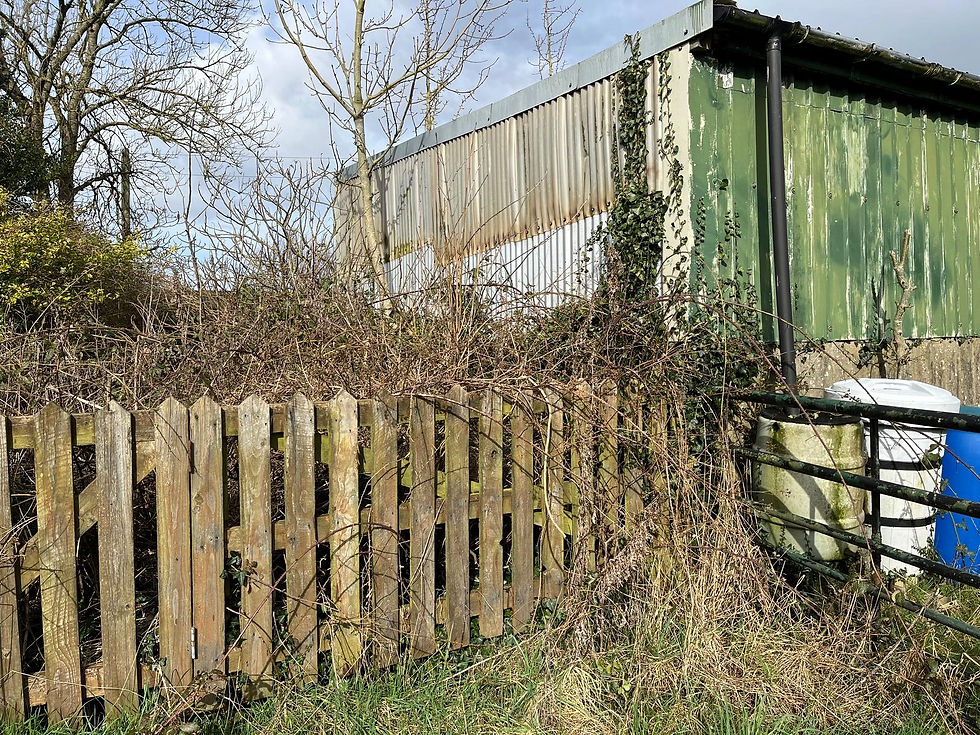
For the first time in years, attention has turned to the outside of the workshop. Overgrown vegetation had gradually closed in around the building, hiding walls, holding moisture and making it difficult to judge the condition of the structure.
Carefully clearing this growth has made an immediate difference. The workshop feels less enclosed, better ventilated, and far easier to access. More importantly, it’s now possible to properly see the exterior and begin understanding what work will be needed next.
This external clearance isn’t about cosmetic improvements — it’s about prevention. Removing ivy and heavy growth helps reduce damp, limits further damage, and creates a clearer picture of how the building has weathered time and neglect.


Looking Towards External Restoration:
With the workshop now more visible, future external work is starting to take shape. The next stages will involve assessing the condition of the walls, roof, doors and exposed timber, and identifying where repairs or weatherproofing will be needed.
Plans include improving drainage around the building, addressing areas vulnerable to moisture, and making sure the structure is properly protected from the elements. Any restoration work will aim to preserve the workshop’s original appearance while strengthening it for continued use, rather than modernising it unnecessarily.
This work will take time and careful planning, but the groundwork is now being laid. Clearing the outside has shifted the project from simple clean‑up to long‑term preservation.

Moving Forward:
While there is still a significant amount to do, the workshop is no longer a forgotten space. With each cleared area and practical improvement, it is steadily returning to life as a working environment, and the path forward is becoming clearer.
This restoration is not about quick results or cosmetic change. It is about doing the work properly — understanding the building, respecting its history, and making considered decisions that will allow it to function well for years to come. Every stage is approached with longevity in mind, ensuring the workshop evolves in a way that supports both the craft and the traditions rooted within it.
I’ll continue to share progress as the restoration moves forward. Change may be gradual, but each step strengthens the workshop’s future and brings it closer to regular, meaningful use — exactly as it was intended.
Part 3 will focus on preparing the workshop for operational use, including refining the internal layout, establishing practical storage, and addressing unresolved building issues. A key task will be assessing and repairing the main sliding door, which has seized as a result of prolonged wet weather, water ingress, and leaking guttering. This work will centre on identifying the source of moisture, freeing the door mechanism, and preventing further damage, with the aim of restoring safe access and improving the workshop’s overall weather resistance as the project moves from restoration towards regular use.


Comments